The Quiet Ways We Make Ourselves Smaller
The Quiet Ways We Make Ourselves Smaller
Exploring women's voices, self-expression and the stories that shape what we believe we're allowed to say, inspired by a conversation with Julie Kenny.
Have you ever found yourself about to say something, only to change your mind at the last moment?
Perhaps you've softened your opinion because you didn't want to sound too forceful.
Played down something you're proud of because you didn't want to appear boastful.
Or found yourself apologising before you've even begun speaking.
Sometimes we don't even notice we're doing it.
We simply adjust.
We read the room, consider how we might be received and decide which parts of ourselves feel safe or acceptable enough to share.
And over time, those little adjustments can become so familiar that we stop questioning them.
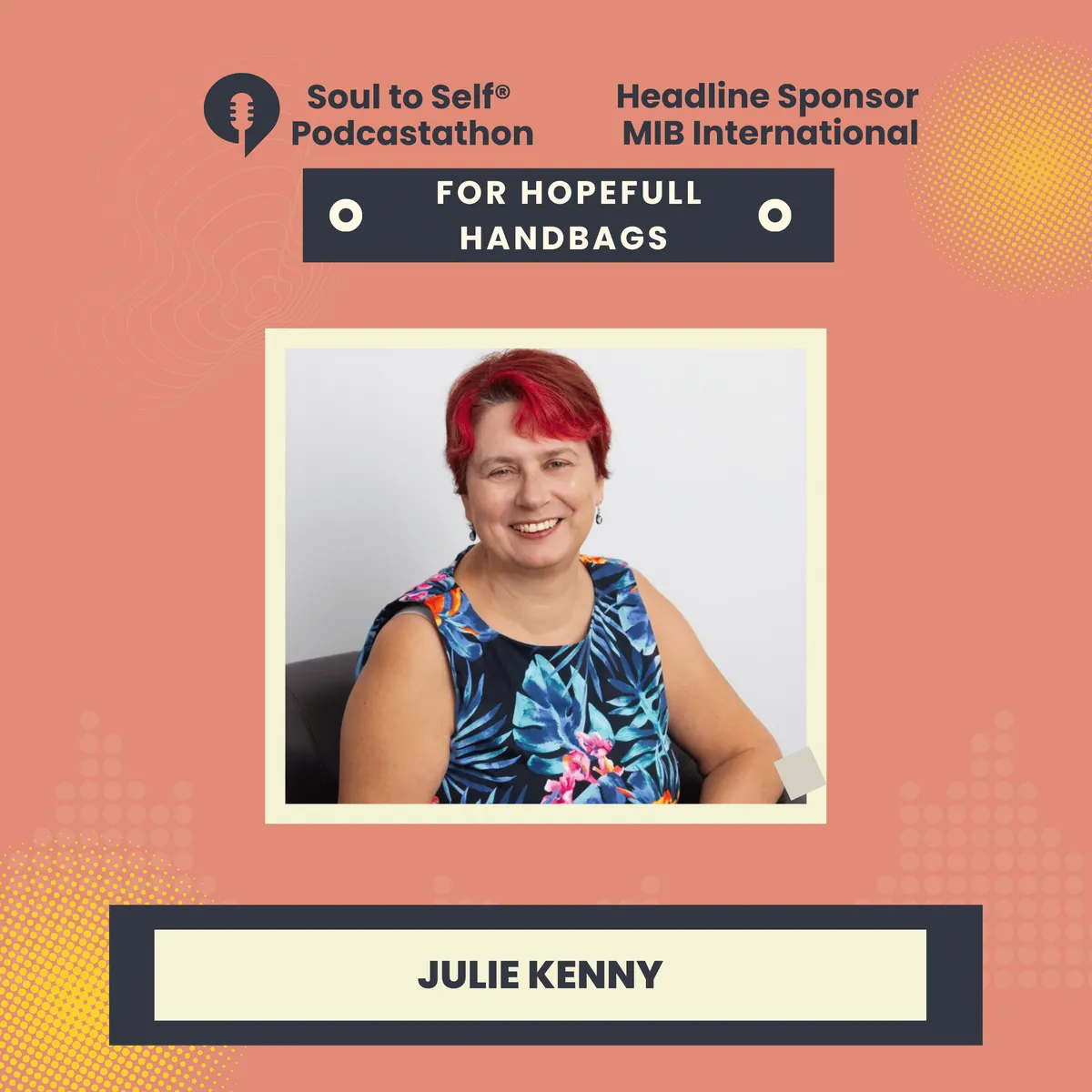
During the Soul to Self® Podcastathon, I had a fascinating conversation with public speaking coach Julie Kenny about how women's voices are quietened, sometimes very obviously, but often in ways that are far more subtle.
It was also a lovely moment to be speaking with her, because Julie recorded this conversation on the day she became a published author, with a chapter on public speaking in The Business Bible.
What began as a conversation about speaking confidently soon opened up a much bigger question.
What happens when we become so accustomed to making ourselves acceptable to others that we lose touch with what we really want to say?
The stories we're told about what's possible
Julie spent around thirty years working in software development, an industry she was repeatedly told had always been dominated by men.
It was simply presented as the way things were.
But after leaving that career and beginning to explore the history of her profession, Julie discovered something that challenged the story she'd grown up hearing.
She learnt about women's significant contributions to early computing and programming, and how work once associated with women had often been treated as less skilled or important.
For Julie, it raised questions about how history is remembered, whose contributions are recognised and what happens when certain stories are repeated so often that we begin accepting them without question.
She reflected on her own experience of studying computer science, where she recalled being one of only six women on a course of approximately 160 students.
And there's something interesting about how the stories we hear can influence the choices we make.
If we're repeatedly told that something isn't really for people like us, how much harder might it feel to imagine ourselves doing it?
Not necessarily because somebody has explicitly told us that we can't.
But because we haven't been shown enough examples of people like us who have.
Julie also pointed out that these messages begin early, from the moment a baby is born and people start to treat girls and boys a little differently, whether or not anyone means to.
Her frustration wasn't simply about the past.
It was about the influence those stories can continue to have on women and girls considering their futures today.
When we learn to edit ourselves
One of the parts of our conversation that really stood out was when Julie began talking about the ways women apologise for themselves.
Not necessarily the obvious apologies we say out loud.
But the quieter, internal ones.
The feeling that we should have dressed differently.
That perhaps we shouldn't have said quite so much.
That we might have sounded too confident, too opinionated or too pleased with ourselves.
And so we begin filtering.
We change how we speak, soften our words or leave out the things that might draw too much attention.
Julie described this as making ourselves more palatable.
And she shared a line that really stayed with me:
"Palatable is not powerful."
It's such an interesting thought, isn't it?
Because being considerate of other people and communicating thoughtfully are wonderful qualities.
But there's a difference between choosing our words with care and changing what we want to say because we're afraid of how somebody might respond.
One allows us to communicate with kindness.
The other can leave us feeling as though we're constantly negotiating how much of ourselves we're allowed to show.
And I wonder how often we recognise that distinction in our own lives.
Julie also spoke about how much deeper this can run for people living with coercive control or domestic abuse, where the message not to say too much, or not to look too bright, can become part of everyday life.
For some women, staying quiet isn't only a habit.
It can be a way of staying safe.
Which is one of the reasons this conversation belongs in a day supporting Hopefull Handbags.
The things we don't say can matter too
Something Julie feels particularly passionate about is the wider impact of women holding back their voices.
In her work with business owners, she sees women who have valuable skills, experiences and services but feel uncomfortable speaking about what they do.
Sometimes it's because they worry about sounding too promotional.
Sometimes they don't recognise the significance of their own experience.
And sometimes they simply don't believe anybody will be interested.
But Julie encourages women to consider the people who might benefit from hearing what they have to say.
If someone doesn't know that support exists, how can they find it?
If an experience is never spoken about, how many other people might continue believing they're the only ones going through it?
And if we continually minimise our ideas, achievements and perspectives, what opportunities for connection might never happen?
Of course, we don't all have to speak publicly or share every part of ourselves.
There are many reasons someone might choose privacy or silence, and those choices deserve respect too.
But Julie's message invites us to consider whether we're choosing not to speak or whether we've learnt to believe that our voice doesn't really matter.
Because those are two very different things.
Why being heard can feel so vulnerable
Julie spoke openly about how uncomfortable she once felt speaking in public.
Even something as simple as being asked to stand in front of colleagues and receive a few kind words when leaving a job was something she dreaded.
Which is rather wonderful when you consider that she now helps other people find confidence in doing exactly that.
When we explored why speaking can feel so vulnerable, Julie made an interesting point.
Unlike a written post, which we can edit, delete or quietly move away from, speaking happens in the moment.
We're visible.
Our reactions, expressions and emotions can be seen.
And once we've said something, we can't simply take the words back and rewrite them.
That can feel frightening.
But Julie also sees something valuable in that vulnerability.
When we speak, people don't just hear the information we're sharing.
They hear our enthusiasm, our humour and the things that genuinely matter to us.
They get a sense of the person behind the words.
And perhaps that's why speaking can create such a meaningful connection.
Not because every sentence is perfectly delivered.
But because there's a real person being heard.
Finding the confidence to take up space
One of the things I particularly enjoyed hearing was Julie's experience with Toastmasters International.
As someone who once avoided public speaking, she's now an active member of two clubs and has taken on leadership roles within the organisation.
But what stood out wasn't simply how much her speaking skills had developed.
It was the environment in which she'd been encouraged to grow.
Julie described being given time to speak, being listened to and receiving feedback from people who genuinely wanted to see her improve.
Not criticism designed to make her feel inadequate.
Not pressure to become somebody else.
But support that recognised where she was and helped her develop from there.
I think there's something important about that, particularly when we're exploring confidence.
Sometimes we imagine confidence as something we need to build entirely on our own.
We tell ourselves to be braver, put ourselves out there or stop worrying about what everybody thinks.
But perhaps part of developing confidence is also finding places where it's safe enough to practise.
Where we can try something, make mistakes, receive encouragement and discover that being visible doesn't always have to feel threatening.
We don't necessarily need to become fearless.
Sometimes we simply need the right support to take the next step.
And when I asked Julie what she'd say to the woman who knows she has something to say but is frightened of using her voice, her answer was short.
Find somebody who can support you.
Don't do it alone.
Your perspective is part of what makes your voice valuable
Towards the end of our conversation, I asked Julie what advice she'd give to somebody who feels nervous about speaking.
And I loved the simplicity of her response.
She explained that most people aren't listening to judge our public speaking skills.
They're listening because they want to understand our perspective.
They want to hear what we know, what we care about and how we see the world.
Two people might have similar qualifications, work in the same profession or offer comparable services.
But they won't necessarily have the same experiences, values or way of communicating.
And those differences matter.
Julie also suggested a simple place to start: journaling about something you now do without thinking.
Chances are there was a time when you weren't sure you could do it.
Because sometimes we forget how much we've already learnt.
The things that now feel completely natural might once have required courage, patience and a fair bit of practice.
And as Julie put it, we can do these things because we've done hard things before.
Perhaps speaking up can become one of those things too.
What might change if we stopped apologising for being ourselves?
I think the lovely thing about this conversation is that it wasn't really about standing on a stage or delivering a perfect presentation.
It was about something much more human.
The experience of wanting to be heard, understood and accepted.
And the ways we sometimes begin changing ourselves in pursuit of that acceptance.
Julie isn't suggesting that everybody needs to be louder or share more than they're comfortable with.
Rather, her work encourages women to recognise when they're holding themselves back and explore what might become possible if they felt more able to express what really matters to them.
Because perhaps taking up space doesn't have to mean dominating a conversation.
Perhaps it means allowing ourselves to contribute without immediately minimising what we've said.
Sharing an achievement without explaining why it's not really that impressive.
Or expressing an opinion without feeling that we need to apologise for having one.
And perhaps the more we practise allowing ourselves to be heard, the more familiar our own voices begin to feel.
Not a louder version of somebody else.
Just a little more of ourselves.
Continue the conversation
This reflection was inspired by my conversation with Julie Kenny, recorded during the Soul to Self® Podcastathon in support of Hopefull Handbags.
If you'd like to hear Julie share more about her experiences, the ways women's voices are quietened, and how we can find the confidence to speak up and take up space, you can listen to the full conversation here.
You can also connect with Julie through her public speaking coaching work and discover her contribution to The Business Bible, in which she shares her expertise on speaking confidently in business. Julie @Softly Inspired
