When Food Becomes About More Than Food
When Food Becomes About More Than Food
Exploring food, guilt, body image and the beliefs we pass from one generation to the next, inspired by a conversation with Loren Knight and Abbie Lodge.
Have you ever eaten something you really fancied, thoroughly enjoyed it, and then almost immediately felt guilty afterwards?
Perhaps you've told yourself you'll be good tomorrow.
Or that you'll start again on Monday.
Maybe you've turned down a meal out because it doesn't fit with whatever plan you're following, or spent an entire evening thinking about what you should and shouldn't eat.
It's funny, isn't it, how something as ordinary as food can become tangled up with so many feelings?
Guilt. Control. Comfort. Celebration. Shame. Even our sense of whether we've had a good or bad day.
And somewhere along the way, we can find ourselves spending an awful lot of time thinking about something that is supposed to nourish us and, hopefully, bring us a little enjoyment too.
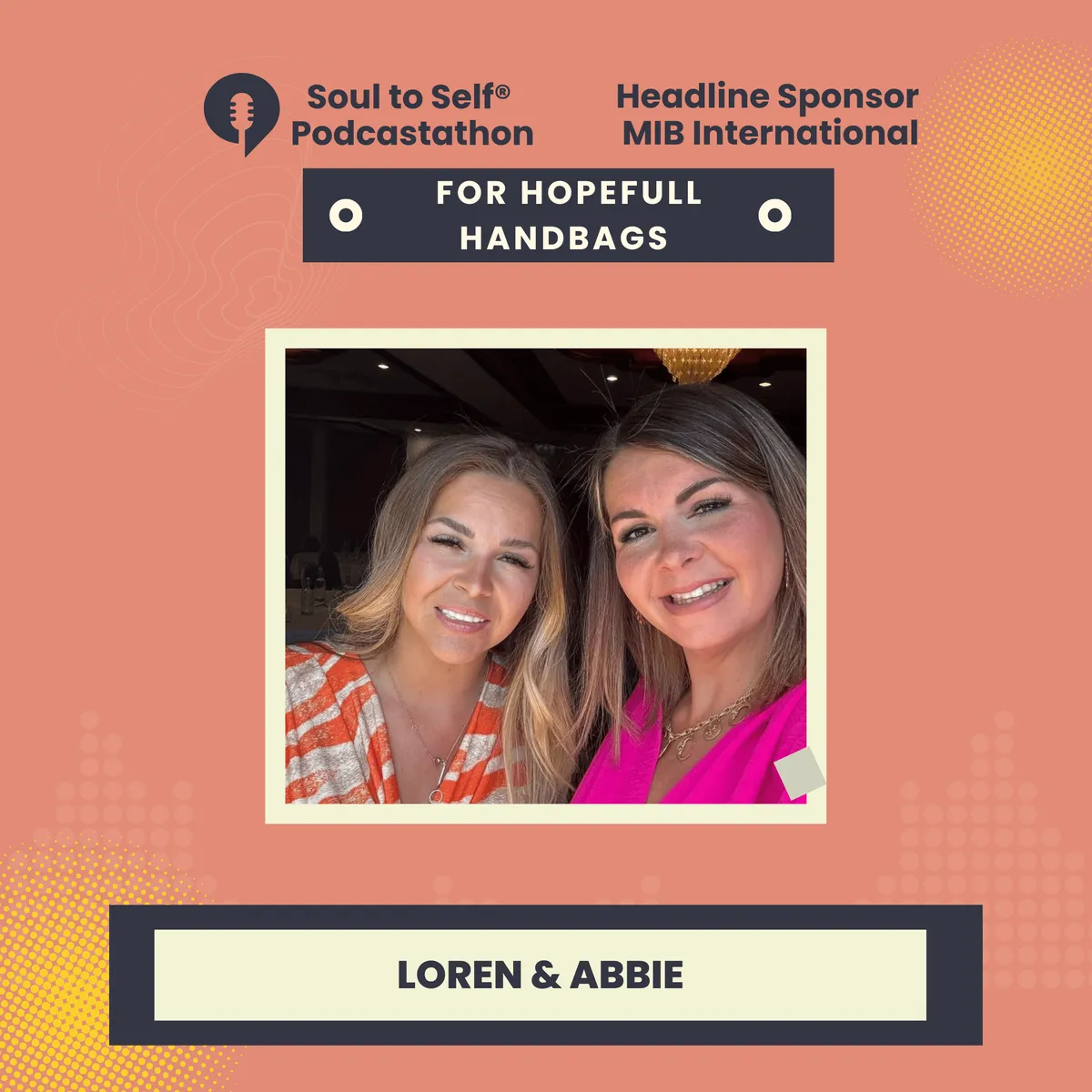
During the Soul to Self® Podcastathon, I was joined by Loren Knight and Abbie Lodge for a wonderfully lively conversation about ending the diet cycle.
And when I say lively, I mean there was laughter, swearing, a few technical hiccups and some fairly entertaining revelations about how they each like to unwind!
But underneath all the humour was a much deeper conversation about the relationship we develop with food, the way we speak to ourselves and the beliefs we pass on to the next generation.
The diet rules we didn't realise we were learning
One of the first things Loren and Abbie spoke about was how their relationship with dieting began long before they became adults.
Both grew up around women who were regularly starting diets, following eating plans and trying different approaches to losing weight.
It was simply part of everyday life.
Loren reflected on attending slimming clubs with her mum, nan and auntie, and experimenting with diets from magazines when she was still young.
Looking back, she recognised how much time she'd spent feeling unhappy with her body, even though she now sees that younger version of herself very differently.
And I think there's something quite poignant about that.
How many of us can look back at photographs of ourselves when we were younger and wonder why we were so critical of the person we see?
We might remember feeling uncomfortable, comparing ourselves with friends or wishing we looked different.
Yet years later, we sometimes see those same photographs with far more kindness.
It raises an interesting question about where those beliefs came from in the first place.
Because we're not born thinking that certain body shapes are better than others, or that eating a particular food makes us good or bad.
Those are ideas we encounter, absorb and sometimes carry with us for years without really stopping to question them.
When food becomes a measure of whether we've been good
Something Loren and Abbie feel particularly strongly about is the language we use around food.
How often do we hear someone say they've been good all week?
Or that they've been naughty because they've eaten chocolate, crisps or a takeaway?
We can begin attaching moral judgements to what we eat, as though our choices somehow determine what sort of person we are.
Loren shared an example of a client who described eating a packet of French Fries crisps as bad.
When Loren asked what made them bad, the client struggled to explain beyond the fact that they weren't part of her plan.
It was simply a belief she'd become accustomed to repeating.
Abbie summed up their perspective rather brilliantly when she said that food doesn't have a moral compass.
And while different foods offer different nutritional benefits, eating something doesn't make us a better or worse person.
There's an important distinction between understanding how food supports our health and attaching shame to the choices we make.
One is about information.
The other can become part of how we judge ourselves.
And when we begin seeing our everyday decisions through that lens, even something as simple as having a snack can carry far more emotional weight than it needs to.
What happens when enjoying life becomes something we have to earn?
Another part of the conversation that stood out was the idea that making changes to our eating habits shouldn't mean putting the rest of our lives on hold.
Loren spoke about clients who worry about attending meals out or special occasions because they're trying to lose weight.
They ask whether they can still go.
Whether they should cancel.
Whether they need to order a salad rather than something they'd genuinely enjoy.
And I think that says quite a lot about the relationship we can develop with dieting.
When did going out for dinner become something that needed permission?
Of course, there are times when people choose to make particular dietary changes for their health or personal circumstances.
But Loren and Abbie encourage their clients to consider how those choices fit into everyday life, rather than treating social occasions as something to avoid.
Because meals aren't only about nutrients or numbers.
They're also part of how we celebrate, connect with people, experience different cultures and enjoy being together.
And if we're constantly putting those experiences on hold until we've reached a particular goal, we might find ourselves missing rather a lot along the way.
The messages our children are watching us live
Perhaps one of the most meaningful parts of the conversation came when Loren spoke about her daughter.
She reflected on how different her daughter's relationship with food and her body appears to be from her own experience at the same age.
At fourteen, Loren says her daughter hasn't shown the same preoccupation with dieting or changing her body that Loren remembers feeling as a teenager.
For Loren, that's something she's incredibly proud of.
She described how her daughter enjoys food, cooks meals for herself and doesn't appear to attach the same guilt or anxiety to eating that Loren once experienced.
And there's something lovely about hearing a parent recognise a difference like that.
Not because we can control exactly how our children will feel about themselves as they grow up.
We can't.
But because the messages they hear and the behaviours they see around them can influence the way they understand their own bodies.
Children notice far more than we sometimes realise.
They hear us criticising our appearance.
They notice when we say we shouldn't eat something.
They pick up on the language we use about weight, food and what it means to be healthy.
And they also notice when we approach those things with a little more kindness and balance.
Loren and Abbie both spoke about wanting to change the patterns they grew up around, rather than automatically passing them on.
I think that's an important part of their motivation.
It's not simply about changing their own relationship with food.
It's about being more aware of the examples they're setting for the people growing up alongside them.
Learning that no is enough
One of the unexpected directions our conversation took was into boundaries.
And I loved that, because it demonstrates just how connected our everyday habits can be to other parts of our lives.
Loren spoke about teaching her children that they don't always have to accept food simply because somebody offers it.
If they're hungry and want something, that's okay.
But if they don't want it, they're allowed to say no.
They don't have to eat something to avoid disappointing another person.
And that opens up a much bigger conversation about how comfortable we are expressing our own needs.
How often do we say yes because we feel guilty?
Because someone has made an effort?
Because we're worried about seeming rude or ungrateful?
Of course, there are moments when accepting something is part of being considerate and connecting with others.
But learning that our own preferences and boundaries matter is valuable too.
Abbie spoke about how practising the words "no, thank you" can become easier with time.
And while they were discussing food, the same idea can apply in plenty of other situations.
Sometimes a boundary doesn't need a lengthy explanation.
Sometimes we're allowed to make a choice simply because it's right for us.
Sometimes the habit isn't really about the food
Towards the end of our conversation, Loren and Abbie began exploring something else that I found particularly interesting.
The habits we develop around eating and how they can become connected to our emotional needs.
Loren gave the example of someone who struggles with evening snacking.
The children have gone to bed, the house is finally quiet and there's a moment to sit down after a long day.
For some people, that moment becomes closely associated with reaching for food.
But Loren encourages her clients to look beyond the snack itself and consider what else might be happening.
Is it hunger?
Is it habit?
Is it the first opportunity they've had all day to relax?
Or has food become part of how they mark the transition from looking after everybody else to finally having a little time for themselves?
There's no single answer, of course.
Eating for enjoyment is a normal part of life, and emotional eating isn't automatically something to feel ashamed of.
But becoming curious about our habits can sometimes help us understand ourselves a little better.
Rather than immediately deciding we lack willpower or discipline, we can begin asking what we're actually experiencing and what might be helpful.
Loren and Abbie also spoke about the importance of finding activities that genuinely help us unwind.
For Loren, it's a bath.
Apparently, almost everything in life can be improved by a bath, including business meetings, although the occasional accidental Zoom appearance from the bathtub might suggest a little caution is needed!
For Abbie, things are rather different.
She enjoys what can only be described as rage-hoovering, spending time with her horses and, when the mood takes her, building Lego.
And I absolutely love that contrast.
Because it demonstrates something important about looking after ourselves.
What helps one person relax might be completely different from what works for somebody else.
There's no universal self-care routine that everybody has to follow.
Sometimes we have to discover our own way of creating a little space for ourselves.
What if we stopped turning everything into a personal failing?
Throughout our conversation, Loren and Abbie kept returning to the idea that changing our relationship with food isn't something that happens overnight.
The beliefs and habits we've developed over years don't simply disappear because we've decided we'd like to approach things differently.
It takes awareness, practice and sometimes support.
Both women draw on their own experiences of weight-loss programmes and now work as consultants supporting others. Their approach includes meal replacements, while also encouraging clients to develop habits and confidence beyond a structured plan.
And although approaches to weight management will differ from person to person, one part of their message feels particularly relevant beyond the subject of food.
Our relationship with ourselves matters just as much as the rules we try to follow.
Because when every deviation from a plan becomes a failure, it's easy to find ourselves stuck in a cycle of criticism and starting over.
We can spend so much time judging what we've done that we forget to consider what might actually help us move forward.
And perhaps there's room for a different kind of conversation.
One where we can understand our choices without attaching shame to them.
Where enjoying something doesn't automatically require guilt afterwards.
And where we can recognise that our bodies, our circumstances and our needs are far more individual than any single set of rules can account for.
Making room for a different relationship with ourselves
What I enjoyed most about this conversation wasn't a particular piece of advice about food or weight loss.
It was the way Loren and Abbie connected those everyday choices to much bigger questions about self-worth, boundaries, learned beliefs and the examples we set for others.
Because how we speak about food can sometimes reveal quite a lot about how we speak to ourselves.
Are we kind?
Are we critical?
Do we trust ourselves to make choices?
Or do we feel we need somebody else's rules to tell us whether we're doing things properly?
There isn't always a simple answer, and everybody's relationship with food is shaped by different experiences and circumstances.
But perhaps becoming more aware of the language we use, the expectations we carry and the habits we've developed can be a useful place to begin.
Not so we can become perfect.
Not so we can finally get everything right.
But so we can begin building a relationship with ourselves that leaves a little more room for enjoyment, understanding and choice.
And perhaps, along the way, we can make it a little easier for the next generation to do the same.
Continue the conversation
This reflection was inspired by my conversation with Loren Knight and Abbie Lodge, recorded during the Soul to Self® Podcastathon on 25 September 2026 in support of Hopefull Handbags. Listen in full here
Loren and Abbie share their experiences of dieting, their approach to weight-loss coaching and their thoughts on developing a more balanced relationship with food. You can connect with them through their facebook here
